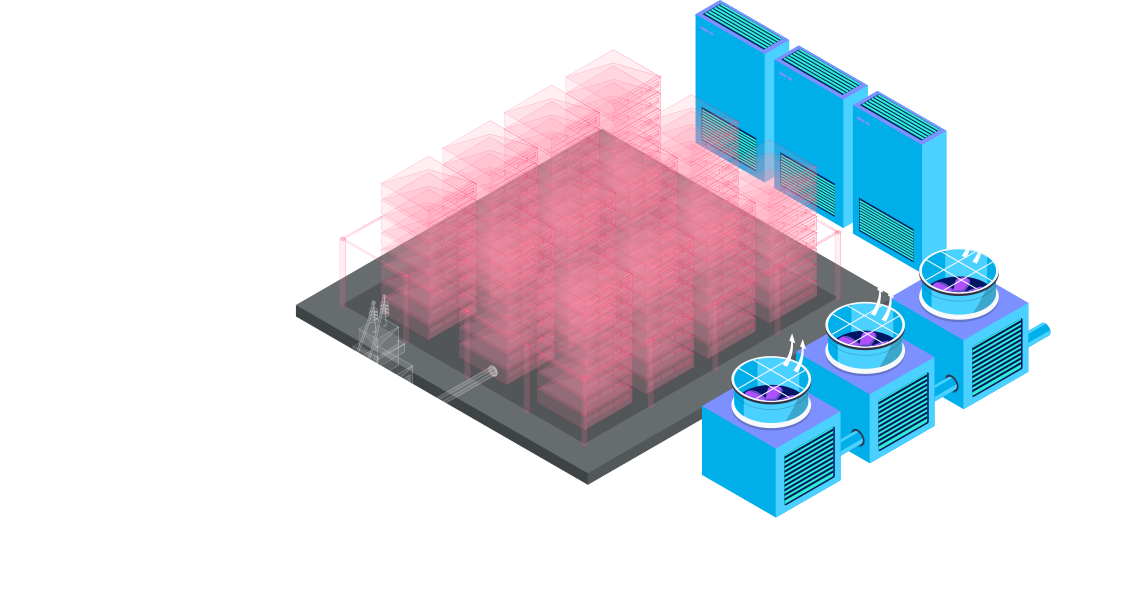
>4.5B

lbs of CO2 are estimated to be emitted annually by a 1-GW data center.

A single gigawatt-scale data center is equivalent to 470,000 cars on the road.

Source: www.thenation.com/article/environment/data-centers-virginia-amazon-environment.

Boarding Pass

ORIGIN

LEGACY SWG

DESTINATION

PONR

While traditional SWGs aim to secure business networks, they come at a staggering environmental cost.


The data centers they rely on are among the largest consumers of electricity globally—consuming more electricity than some entire countries—and are expected to double their footprint in the next decade.

How Legacy SWGs Work


How Legacy SWGs Work


[secure_web_gateway]

(and Where They Fail)

Home

Hotel

Office

In_The_Beginning

>>

In_The_Beginning

>>

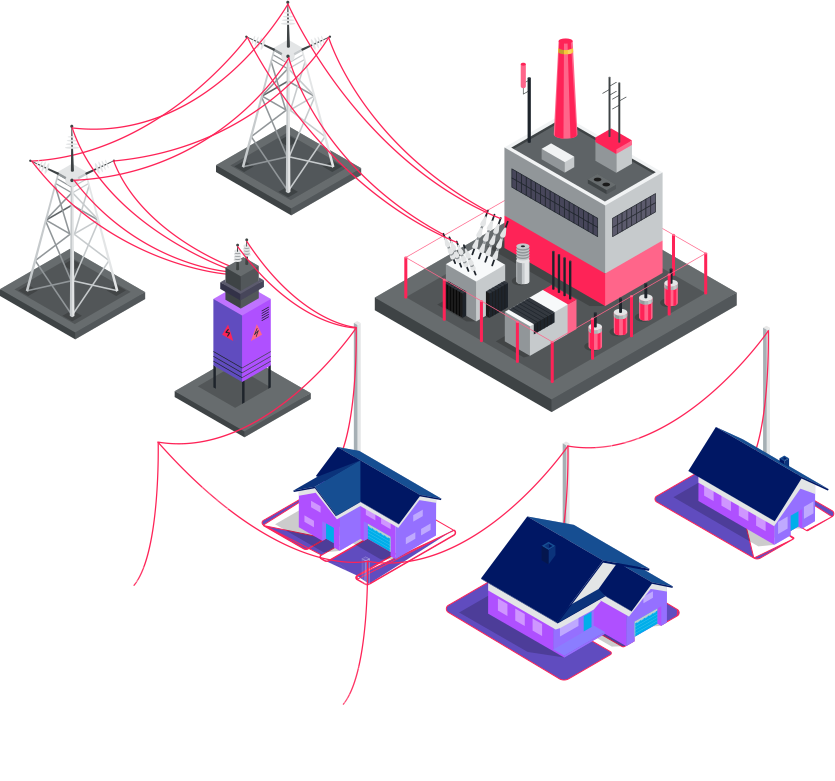
Imagine an employee working from home, at a hotel, or in an office.

Imagine an employee working from home, at a hotel, or in an office.

They need to access a website, a cloud application, or send data securely. Instead of going directly to the internet, here’s what happens:

They need to access a website, a cloud application, or send data securely. Instead of going directly to the internet, here’s what happens:

(1.0)

(1.0)

The Employee Makes a Request—Whether it’s loading a webpage, sending an email, or starting a video call, the request should go directly to the destination.

The Employee Makes a Request—Whether it’s loading a webpage, sending an email, or starting a video call, the request should go directly to the destination.

(3.0)

(3.0)

Request Finally Reaches Its Destination...At Least Its Halfway Point—After this entire journey, your request is processed, and turns around to undergo the same backhauling process on the way back.

Request Finally Reaches Its Destination...At Least Its Halfway Point—After this entire journey, your request is processed, and turns around to undergo the same backhauling process on the way back.

(5.0)

(5.0)

The Request Returns To Your Employee—After all of those steps to process your request, your employee is able to load that webpage, send that email, or start that video call.

The Request Returns To Your Employee—After all of those steps to process your request, your employee is able to load that webpage, send that email, or start that video call.

(4.0)

(4.0)

Increased Security Risks—Every extra “hop” through different network points increases the attack surface, making companies more vulnerable to cyber threats.

Increased Security Risks—Every extra “hop” through different network points increases the attack surface, making companies more vulnerable to cyber threats.

(2.1)

(2.1)

Security Processing & Inspection—The data center inspects the request for security threats, filtering web categories and enforcing policies.

Security Processing & Inspection—The data center inspects the request for security threats, filtering web categories and enforcing policies.

(2.2)

(2.2)

Traffic Delays & Bottlenecks—

As thousands of users send their data through the same centralized hub, congestion causes slow load times, buffering video calls, and laggy apps.

Traffic Delays & Bottlenecks—

As thousands of users send their data through the same centralized hub, congestion causes slow load times, buffering video calls, and laggy apps.

(2.0)

(2.0)

Rerouting to a Data Center—Instead of going straight to its destination, the request is backhauled through a remote data center, often in another state or country.

Rerouting to a Data Center—Instead of going straight to its destination, the request is backhauled through a remote data center, often in another state or country.

(6.0)

The Hidden Toll—The data center running all these security checks requires massive electricity consumption, generating carbon emissions equivalent to a small city.

Powering the Internet at a High Environmental Cost.

>>

The Environmental Toll
of Data Centers

FIG.

B
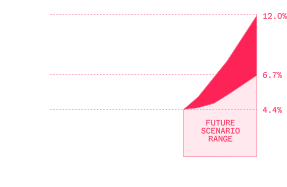
Source: publications.lbl.gov/sites/default/files/2024-12/lbnl-2024-united-states-data-center-energy-usage-report.pdf.

2028

Data center energy consumption could rise to 12% of the nation’s total electricity use.

As AI and cloud computing expand, power grids will struggle to keep up with the data center energy load.

176

TWh

Terawatt-hours consumed by U.S. data centers in 2023. That’s 4.4% of the nation’s total electricity use, and greater than some entire countries.

FIG.

A
Source: Fulghum, Nicolas. “Yearly Electricity Data.” Ember, ember-energy.org/data/yearly-electricity-data.

5M

gallons

of water consumed daily
per large data center.


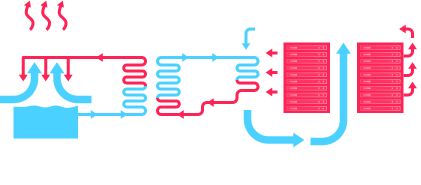
Data centers require water-intensive cooling systems, straining local resources that could otherwise be used to supply tens of thousands of households or farms.

SOURCE: Osaka, Shannon. “A New Front in the Water Wars: Your Internet Use.” The Washington Post.

FIG.

C
© 2024 dope.security Inc.

Made with

in california

It’s not that we’re mad at yesterday’s cybersecurity. Just disappointed. So we made it better. We made it easier.


We made it dope.

You should upgrade From Legacy

Experience Better Speed, Security, and Sustainability

A Better

Way Forward

We’ve rearchitected the SWG so your security checks happen locally with you, not at a data center. Experience direct access.

End

arrow-up

Why You should upgrade From Legacy

Speed, Security, and Sustainability at Risk

The

The

Hidden

Hidden

Hidden

Costs

Costs

of Legacy SWGs

of Legacy SWGs

Begin

Please view on Desktop

arrow-down

For decades, businesses have relied on traditional Secure Web Gateways to protect their employees and corporate networks.


But these legacy systems, built around data center backhauling, are now slowing you down, exposing you to risks, and damaging the environment.

Boarding Pass

ORIGIN

LEGACY SWG

DESTINATION

DATA CENTERS